

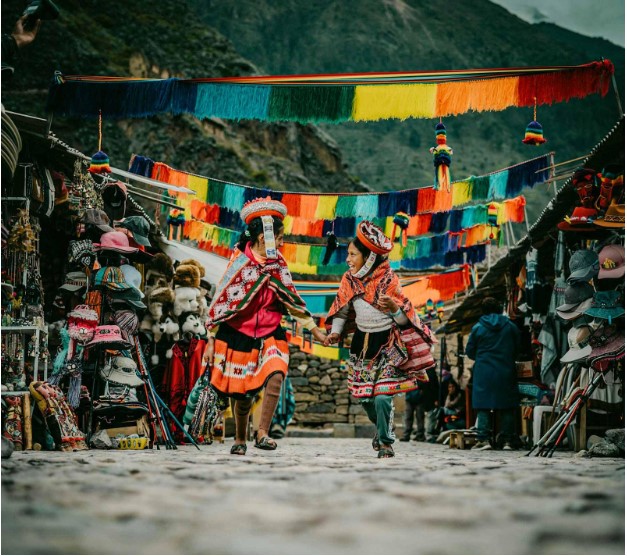

Peru has this way of surprising you at every turn. You show up thinking you know what to expect from all those documentaries and Instagram posts, then reality hits differently. Maybe it’s watching an elderly woman weaving patterns her grandmother taught her, or realizing the mountain trail you’re hiking has been walked for centuries. The country offers layers of experience that go way beyond just snapping photos at famous ruins. Getting under the surface takes some effort, but that’s where the real magic happens.
Living Culture in the Highlands
Peru cultural tours reveal that this isn’t a country frozen in time. Sure, the ancient ruins are spectacular and the history runs deep, but culture here is alive and constantly shifting. Walk through any market around Cusco and you’ll see what I mean. Women in traditional layered skirts and bowler hats sell vegetables next to younger vendors in jeans and soccer jerseys. Both are authentically Peruvian, just expressing it in different ways.
The textile traditions particularly show this blend of old and new. In communities throughout the highlands, women still use backstrap looms and natural dyes made from plants and minerals. The patterns woven into belts and ponchos carry meaning, identifying which village someone comes from and sometimes their role in the community. Watching a weaver work, seeing how she creates complex designs entirely from memory without any written pattern, gives you real appreciation for skills that take years to master.
But these weavers also have smartphones. Their kids go to schools where they learn Spanish alongside Quechua. They sell their work online now in addition to local markets. Understanding that balance helps you see Peru as a place where people actually live rather than an open-air museum. The culture adapts and evolves while maintaining connections to practices that stretch back generations.
Food offers another window into living culture. Peruvian cuisine has exploded internationally, but eating in local homes or small neighborhood restaurants gives you a different perspective than fancy Lima establishments. You taste dishes that haven’t been adapted for tourist preferences. Pachamanca, where meat and vegetables cook in an underground oven heated with hot stones, uses methods older than the Inca Empire. Cuy, or guinea pig, remains special occasion food in the highlands. These aren’t tourist attractions but real parts of how people eat and celebrate.
Music and festivals bring communities together throughout the year. If your timing works out, you might stumble into a local celebration with brass bands, dancers in elaborate costumes, and rituals that blend Catholic and indigenous elements. These aren’t performances staged for visitors but genuine expressions of community identity. Being invited to observe or participate feels like a privilege rather than something you’re entitled to as a paying customer.
The cultural tours that work best create genuine exchanges rather than treating people as exhibits. Good operators connect you with communities in ways that feel respectful and reciprocal. You’re not just observing but engaging, whether that’s learning to prepare traditional dishes, trying your hand at weaving, or sitting down for coca tea and conversation. These interactions often become the moments people remember most from their entire trip.
Exploring the Imperial City and Beyond
Cusco tours give you access to a city that serves as both a living community and an incredible historical site. The downtown streets still follow the Inca grid layout. Massive stone walls built centuries ago support Spanish colonial buildings and modern businesses. You can run your hand along blocks fitted so precisely that you can’t slide a credit card between them, then walk into a cafe for excellent coffee and wifi.
The city deserves several days of your time. Beyond the obvious highlights like the Plaza de Armas and Qorikancha, smaller neighborhoods reveal daily life. San Blas, the artisan quarter, winds up the hillside with narrow streets, craft workshops, and local restaurants tucked into colonial buildings. Markets like San Pedro show you where locals actually shop for produce, meat, and household goods rather than tourist souvenirs.
Day trips from Cusco reach archaeological sites that often get overshadowed by Machu Picchu but deserve attention in their own right. Sacsayhuaman sits just above the city, with megalithic stones that make you wonder how they were moved and positioned without modern equipment. Tambomachay’s water channels still function after 600 years. Qenqo’s carved rocks and underground passages hint at ceremonial uses we’re still trying to fully understand.
The surrounding areas offer even more variety. Rainbow Mountain has exploded in popularity recently, and yeah it’s crowded now, but those mineral-streaked slopes really do look unreal. The South Valley gets less attention than its sacred counterpart but holds fascinating sites like Tipon’s agricultural terraces and water systems. Each direction from Cusco reveals something different, whether that’s ruins, traditional villages, or landscapes that make you stop and stare.
Tours in Cusco range from large group bus tours to private experiences with expert guides. The difference in quality and depth varies wildly. Big group tours hit the main spots efficiently but you’re constantly waiting for everyone to gather and move on just as you’re getting interested in something. Smaller groups or private guides let you set the pace and dig deeper into whatever catches your attention.
Walking the Classic Andean Route
The inca trail 2025-2026 season brings thousands of trekkers to Peru’s most famous mountain route. This four-day journey follows actual Inca roads to Machu Picchu, passing ruins that most visitors never see and camping in locations that make you understand why the Incas considered these mountains sacred. The combination of physical challenge, spectacular scenery, and cultural immersion creates an experience that sticks with you long after your legs stop being sore.
Permits remain strictly limited to 500 people per day including guides and porters, and they sell out fast for peak season between May and September. If you’re planning to trek during those months, booking six months ahead isn’t too early. The shoulder months of April and October offer more availability with weather that’s usually decent, though you’re taking more of a chance with rain. The wet season from November through March sees far fewer trekkers but expect muddy trails and afternoon downpours.
The trek itself demands respect without requiring elite fitness. Altitude presents the biggest challenge. You’re hiking between 8,000 and 13,800 feet where the air holds less oxygen. Even people who are really fit at sea level struggle with the climbs. Spending a few days in Cusco before you start lets your body adjust and makes the whole experience way more enjoyable. Rushing straight from sea level to high-altitude trekking is asking for a miserable time.
Day two, the climb to Dead Woman’s Pass at nearly 14,000 feet, tests everyone. The ascent is relentless and you’ll be breathing hard regardless of your conditioning. But reaching the top, with views opening up in every direction and that sense of accomplishment washing over you, makes the struggle worthwhile. The steep descent on the other side is hard on knees and quads, so trekking poles really help.
The support system makes it manageable. Porters carry tents, cooking gear, and most of your stuff. You hike with just a daypack holding water, snacks, and layers. Cooks prepare hot meals at each camp, often surprisingly elaborate given they’re working at altitude with camp stoves. Guides handle navigation and provide context about ruins and landscapes along the way. This setup lets you focus on walking and taking in the experience rather than stressing about logistics.
Weather in the mountains changes fast. You start each morning bundled against the cold, strip down by mid-morning when sun breaks through, then pile layers back on when clouds roll in. Rain gear is essential even during the dry season because storms can appear quickly. Nights at the high camps get genuinely cold, so a quality sleeping bag rated for low temperatures matters more than you might think.
Pushing Your Limits in the Andes
Peru adventure tours go way beyond visiting ruins and museums. The country’s geography creates natural opportunities for getting your adrenaline pumping. The Andes Mountains offer terrain for trekking, mountain biking, rock climbing, and even mountaineering if you’re into serious altitude. The Amazon basin provides completely different adventures like jungle treks, canoe trips, and wildlife spotting. And the coast has surfing, sandboarding, and paragliding for those who prefer lower elevations.
The adventure options scale to whatever comfort level you bring. Maybe you’re experienced with backcountry camping and ready to tackle technical routes. Or perhaps you just want moderate day hikes that reward you with views and a sense of accomplishment. Peru accommodates both, plus everything in between. The infrastructure for adventure travel is well-developed with professional guides, quality gear rental, and established safety protocols.
Multi-day treks beyond the Inca Trail deserve serious consideration. The Salkantay route takes you past massive glaciated peaks and through terrain that shifts dramatically from alpine to subtropical. The Ausangate circuit circles one of Peru’s most sacred mountains, with rainbow-colored slopes and passes above 16,000 feet that really test your limits. The Choquequirao trek reaches ruins that rival Machu Picchu but see a tiny fraction of the visitors.
Biking opportunities range from mellow valley rides to death-defying descents. The route from Abra Malaga passes down to Santa Maria drops over 11,000 feet through cloud forests and along cliff edges. It’s exhilarating and terrifying in equal measure. River rafting on the Urubamba or Apurimac ranges from gentle floats to serious Class IV rapids depending on the section and season.
The Amazon portion of Peru opens up entirely different adventures. Jungle lodges serve as base camps for exploring rainforest that shelters incredible biodiversity. You can paddle canoes through flooded forests, fish for piranha, trek to oxbow lakes, or take night walks where your headlamp reveals creatures you never imagined existed. The humidity and heat hit hard after the cool mountains, but the concentration of wildlife makes it worthwhile.
Getting the Full Story at the Main Attraction
A machu picchu guided tour transforms your visit from sightseeing into genuine understanding. You can absolutely explore on your own, and some people prefer that freedom. But having a knowledgeable guide changes what you see and how you process it. They point out details you’d walk right past, explain purposes behind architectural features, and provide context that helps you grasp how sophisticated Inca civilization really was.
Good guides read the stonework and landscape in ways that reveal layers of meaning. That window isn’t just decorative but aligns with specific mountain peaks considered sacred. The terracing demonstrates understanding of microclimates and water management that still impresses modern engineers. The layout reflects Inca cosmology and their relationship with the natural world. These insights accumulate until Machu Picchu shifts from beautiful ruins to a place you actually understand.
Guides also help you navigate practical challenges. They know crowd patterns and position you to avoid bottlenecks. They understand which viewpoints work best at different times of day. They can honestly assess whether climbing Huayna Picchu makes sense for your fitness and comfort with heights. And quality guides admit when they don’t know something rather than making up answers that sound authoritative.
The difference between a mediocre guide and an excellent one shows up constantly. Mediocre guides recite memorized scripts and rush you through on a schedule. Great guides notice what interests you and adjust their approach. They welcome questions and create space for you to absorb what you’re seeing rather than just checking boxes. They connect Machu Picchu to the broader Inca world and help you understand how this site fit into the larger empire.
Group size affects your experience significantly. Large tours of fifteen or twenty people mean constantly waiting for everyone to gather and competing for views. Smaller groups or private guides give you flexibility and the guide’s full attention. You can spend more time at spots that grab you and skip past things that don’t resonate as much.