

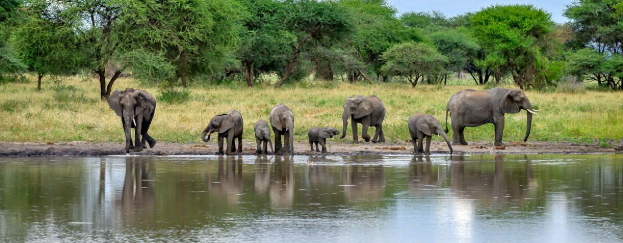

Ancient baobabs, thousand-strong elephant herds, and a wilderness atmosphere that rewards the traveler who looks beyond the headline parks — Tarangire National Park is Tanzania’s most beautifully kept secret.
Introduction
There is a particular satisfaction that comes from discovering a place before the world has fully caught up with how extraordinary it is. In the landscape of East African safari destinations, that place is Tarangire National Park safari. While neighboring Serengeti and Ngorongoro draw the majority of Tanzania’s safari visitors — and deservedly so — Tarangire quietly delivers wildlife experiences that rival and in several important respects surpass what those headline parks provide, within a landscape of such haunting, primordial beauty that photographers and naturalists who encounter it frequently describe it as the finest visual environment in the entire northern Tanzania circuit.
Tarangire sits in the Manyara Region of northern Tanzania, approximately 120 kilometers southwest of Arusha, covering an area of 2,850 square kilometers that encompasses the Tarangire River and its surrounding ecosystem of open savannah, swamp, seasonal floodplain, and the extraordinary acacia and baobab woodland that defines the park’s iconic visual character. Established as a national park in 1970, Tarangire protects a vital dry-season refuge for wildlife across the greater Tarangire-Manyara ecosystem — an area that functions as a connected migratory system drawing animals from a range of nearly 20,000 square kilometers during the annual dry season.
For safari travelers willing to spend one or two nights beyond the headline parks, Tarangire rewards with extraordinary intimacy, diverse wildlife, and the singular visual experience of African megafauna moving through a landscape of ancient baobab trees that makes every game drive a composition study in natural grandeur. This article is your definitive guide to the Tarangire National Park safari — covering the wildlife, the landscape, the best time to visit, where to stay, and everything that makes Tarangire not merely a supplement to the standard Tanzania northern circuit but, for many returning visitors, its most treasured chapter.
The Tarangire Landscape: Baobabs, Rivers, and Ancient Light
The Baobab Woodland
The baobab tree defines Tarangire’s visual identity more completely than any single landscape feature defines any other Tanzania park. These extraordinary trees — Adansonia digitata, the “tree of life” — grow across much of sub-Saharan Africa, but nowhere are they more numerous, more ancient, or more visually dominant than in Tarangire’s northern and central zones. Individual trees in the park are estimated to be between 1,000 and 3,000 years old, their massive, smooth-barked trunks swelling to circumferences of fifteen meters or more, their branches spreading in the irregular, reaching patterns that give the baobab its legendary appearance.
At golden hour — the equatorial forty minutes after sunrise and before sunset when Tanzania’s light transforms the landscape — baobab silhouettes against a burning amber sky create compositions of such inherent visual drama that experienced wildlife photographers cite Tarangire as the finest landscape photography destination in the entire northern Tanzania circuit. An elephant herd moving through a grove of thousand-year-old baobabs in the late afternoon light is not merely a wildlife sighting — it is a visual experience of primordial grandeur that connects the observer to deep geological and biological time simultaneously.
The baobab’s ecological significance in Tarangire extends beyond aesthetics. The trees function as natural water storage systems — mature specimens hold thousands of liters of moisture within their fibrous trunks — and as habitat for dozens of bird species, small mammals, and reptiles that nest and shelter within their hollows and bark crevices. Understanding the baobab as an ecological keystone species, rather than simply a beautiful tree, deepens the Tarangire safari experience from visual appreciation into ecological comprehension.
The Tarangire River
The Tarangire River is the ecological spine of the tarangire national park safari and the engine of its extraordinary dry-season wildlife concentrations. Rising in the highlands to the south and flowing northward through the park to its terminus in Lake Burungi, the river maintains permanent water through the dry months when surrounding water sources fail — creating a gravitational pull that draws wildlife from across the greater ecosystem in seasonal migrations of remarkable scale.
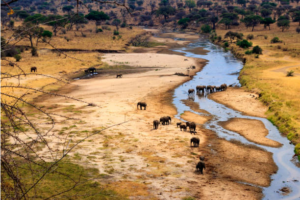
During the peak dry season from July through October, the Tarangire River’s banks become one of Africa’s most dramatic wildlife corridors — elephants, buffaloes, zebras, wildebeest, and the full complement of northern Tanzania predators gathering in concentrations that transform the river’s margins into a living, continuously dynamic tableau of wildlife activity. Vehicle stops beside active river stretches during this period can yield hours of uninterrupted wildlife viewing without the vehicle moving at all, as successive waves of different species arrive, drink, interact, and depart.
Wildlife: Tarangire’s Extraordinary Animal Populations
African Elephants: Africa’s Greatest Congregation
Tarangire’s elephants are the park’s defining wildlife attraction and, during the dry season, its most overwhelming spectacle. The park supports one of Africa’s largest elephant populations — estimates range from 2,500 to 4,000 individuals within the broader Tarangire ecosystem — and the dry-season concentration of these animals along the Tarangire River creates elephant viewing opportunities of a scale and intimacy unavailable in any other northern Tanzania park.
Herds of 50, 100, and occasionally several hundred elephants are regularly encountered at riverside drinking and bathing locations during the peak dry season. These are not isolated sightings but sustained encounters — family groups interacting, bulls sparring, calves playing in the water, matriarchs leading processions from one grazing zone to another — that provide hours of continuous behavioral observation impossible to compress into a twenty-minute vehicle stop.
Tarangire’s elephants are notable for the scale of their tusks — several individuals carry extraordinary ivory that reflects both age and the mineral richness of the park’s vegetation. The park is also recognized by elephant researchers as home to some of the finest elephant behavioral observation opportunities in Africa, with family groups sufficiently habituated to vehicles that intimate, undisturbed behavioral study is possible on most extended game drives.
Lions, Leopards, and Cheetahs: Predators in the Baobab Country
Tarangire’s predator populations reflect the park’s exceptional prey base. Lion prides are distributed across the park’s savannah zones, particularly in the acacia woodlands of the north and the open grasslands of the south where zebra and wildebeest concentrations are highest during the dry season. The Silale and Gurisi swamps in the park’s southern areas provide year-round water sources that concentrate prey and by extension predators in numbers that produce consistent sighting opportunities across the full annual calendar.
Leopards inhabit the park’s denser riverine vegetation and are regularly spotted in baobab trees — the visual combination of spotted coat, massive tree, and golden savannah background creates photographic opportunities of extraordinary compositional elegance that Tarangire’s guide community knows how to locate with above-average reliability. Cheetah are present in the park’s more open southern zones, though sightings are less frequent than in the open Serengeti plains.
Wild Dogs: Tarangire’s Most Celebrated Predator Encounter
The African wild dog — among Africa’s most endangered large predators, with a continental population estimated at fewer than 6,600 individuals — finds in Tarangire one of Tanzania’s most reliable and most intimate viewing environments. Several wild dog packs are resident within the park and adjacent private concessions, and their hunting behavior on Tarangire’s open grasslands provides wildlife encounters of exceptional behavioral richness — the coordinated team hunting strategy, the pup-rearing den behavior, and the pack’s distinctive greeting ceremonies are all visible to patient observers who work with guides experienced in tracking these animals.
For wildlife photographers and naturalists, a wild dog encounter in Tarangire represents one of Tanzania’s most treasured specific safari experiences — ranking alongside the Ngorongoro rhino and the Serengeti river crossing as a sighting whose rarity and behavioral complexity create encounters of lasting significance.
Bird Life: Over 550 Species in a Single Park
Tarangire is a destination of global significance for birdwatchers — its 550-plus confirmed species represent one of the highest per-area bird diversities of any East African national park. The park’s variety of habitats — riverine woodland, open savannah, acacia thicket, swamp, and seasonal floodplain — supports an extraordinary breadth of avian diversity across feeding guilds, behavioral niches, and seasonal migration patterns.
Key Tarangire bird species include the iconic southern ground hornbill, the yellow-collared lovebird (endemic to the Tarangire-Manyara ecosystem), the ashy starling (another near-endemic), the martial eagle, bateleur, secretary bird, and kori bustard among the raptors and large terrestrial species, and a remarkable diversity of bee-eaters, rollers, kingfishers, and hornbills that populate the riverine vegetation with color and movement throughout the year. For dedicated birders, Tarangire warrants a dedicated two to three-day visit independent of any mammal safari component — the birding diversity alone justifies the journey.
Tarangire’s Annual Wildlife Calendar
Dry Season (June through October): Peak Elephant Concentration
The dry season is Tarangire’s most celebrated and most visited period — the months when the full power of the park’s dry-season aggregation dynamic is visible in all its extraordinary scale. From June onward, water sources across the surrounding ecosystem begin to fail and wildlife movements toward the Tarangire River intensify. By August and September, elephant herds of hundreds of individuals are a regular feature of riverside game drives, and the total wildlife concentration along the river creates a continuous, hours-long game drive experience that experienced safari operators describe as one of the most reliable and most overwhelming wildlife viewing environments in Africa.
Green Season (November through May): Calving, Color, and Exclusivity
The green season — particularly the short rains of November and December and the long rains of March through May — transforms Tarangire into a landscape of vivid, lush beauty that the dry season’s golden magnificence cannot replicate. Migratory bird species arrive from the northern hemisphere, swelling the bird list dramatically. Wildebeest and zebra calving occurs on the southern plains, creating the same tender vulnerability and predator intensity that the Serengeti’s calving season produces, but in a significantly less visited environment. Accommodation rates drop substantially, visitor numbers are at their annual minimum, and the bush feels expansive and privately possessed in ways that peak season cannot deliver.
Where to Stay: Tarangire Accommodation
Inside the Park
Tarangire Treetops Lodge is Tarangire’s most iconic accommodation — individual suites built within and around enormous baobab trees and ancient jackalberry trees, elevated above the park floor in structures that combine architectural drama with extraordinary wildlife proximity. Staying within the park boundary means that game driving begins from the accommodation doorstep, with the first sighting frequently visible before breakfast.
Oliver’s Camp, operated by &Beyond, provides a small-camp intimate experience with a strong commitment to walking safari and night game drive programming — activities unavailable in the standard national park but accessible through the camp’s adjacent private concession. The camp’s guiding quality is consistently rated among northern Tanzania’s finest.
Sanctuary Swala Camp sits in a private concession within the park’s southern zone adjacent to the elephant-rich Gurisi swamp, providing both vehicle and walking safari access in a setting of considerable natural beauty.
On the Park Boundary
Tarangire Safari Lodge occupies a spectacular elevated position on the park boundary with panoramic views over the Tarangire valley and river below — one of northern Tanzania’s finest views from a fixed accommodation position. Several mid-range tented camps on the park’s eastern boundary provide comfortable, well-managed alternatives for travelers prioritizing wildlife access over accommodation luxury.
Combining Tarangire With the Broader Northern Circuit
Tarangire integrates naturally into northern circuit itineraries as either an opening or closing chapter. Its position between Arusha and the deeper circuit parks makes it a logical first or last stop — the journey from Arusha to Tarangire takes approximately two hours by road, and the park’s accessible wildlife richness provides an immediate and deeply rewarding safari introduction for travelers beginning the northern circuit, or a reflective, intimate final wildlife chapter for those concluding it.
One to two nights is the standard allocation for most northern circuit visitors. Two nights allows for meaningful dry-season elephant viewing, a dedicated birdwatching morning, and the possibility of an evening walking safari in the private concession zones — sufficient time for Tarangire to reveal its deepest and most distinctive character.
Key Takeaways
- Tarangire National Park is Tanzania’s most consistently underrated safari destination — a park of extraordinary wildlife density, diverse habitat, and visually magnificent baobab landscape that rivals its more famous northern circuit neighbors.
- The dry season from June through October produces Africa’s most spectacular elephant concentrations, with herds of hundreds gathering along the Tarangire River as the surrounding ecosystem’s water sources fail.
- Ancient baobab trees — some estimated at 1,000 to 3,000 years old — define Tarangire’s visual identity and create wildlife photography compositions of a grandeur unavailable in any other northern Tanzania park.
- Tarangire supports one of Tanzania’s most reliable wild dog populations — a critically endangered species whose pack hunting behavior and den dynamics provide behavioral wildlife encounters of exceptional rarity and richness.
- With 550-plus confirmed bird species, Tarangire is one of East Africa’s premier birdwatching destinations, supporting endemic and near-endemic species including the yellow-collared lovebird and ashy starling alongside extraordinary raptor, roller, and bee-eater diversity.
- Walking safaris and night game drives, available through the private concessions adjacent to the main park area, add adventure dimensions to the Tarangire experience unavailable within the standard national park boundary.
- The green season (November through May) offers vivid landscape beauty, excellent birding, calving wildlife, and dramatically lower visitor numbers and accommodation rates — an outstanding alternative to peak season for experienced safari travelers.
- Tarangire pairs most naturally as a one to two-night addition to the broader northern circuit — positioned between Arusha and the Serengeti-Ngorongoro core as either a compelling opening chapter or a reflective, intimate conclusion.
- Tarangire Treetops Lodge and Oliver’s Camp by &Beyond represent the park’s finest accommodation options — combining architectural distinction, exceptional guiding, and private concession access.
- Tanzania’s northern circuit is significantly enriched by including Tarangire — travelers who bypass it consistently report, upon speaking to those who have visited, that they wish they had allocated the extra nights.
Questions & Answers
Q: How does Tarangire compare to the Serengeti and Ngorongoro for first-time Tanzania safari visitors? Tarangire occupies a different but complementary position to both headline parks. The Serengeti delivers the Great Migration and year-round predator viewing at a scale and spatial grandeur that no other ecosystem matches. Ngorongoro delivers near-certain Big Five encounters in the world’s most concentrated wildlife sanctuary. Tarangire delivers something distinct from both: extraordinary elephant encounters in a visually magnificent baobab landscape, with a more intimate, less visited atmosphere that allows for wildlife encounters of genuine unhurried depth. For first-time visitors with itineraries of ten nights or more, including Tarangire alongside the Serengeti and Ngorongoro creates a northern circuit of genuine variety and depth — the three parks complement each other rather than duplicating each other’s offerings. For first-time visitors with seven nights or fewer, the Serengeti and Ngorongoro take priority, and Tarangire becomes the compelling reason to return.
Q: What is the best time of year to visit Tarangire for elephant viewing? July through October represents the undisputed peak of Tarangire’s elephant concentration season. By August and September, the dry-season aggregation dynamic is at its maximum intensity — the Tarangire River is one of the only permanent water sources remaining within a vast surrounding area, and the elephant herds that converge on its banks during these months create viewing opportunities of a scale difficult to comprehend without witnessing in person. Herds of 200 to 500 animals are regularly recorded at riverside locations during this window. For travelers whose primary Tarangire motivation is the elephant spectacle, these two months represent the optimal visit timing. June and late October also offer excellent elephant concentration viewing at the beginning and tail end of the peak period with slightly lower visitor numbers than the August-September apex.
Q: Are walking safaris available in Tarangire National Park? Standard walking safaris are not permitted within the Tarangire National Park boundary under Tanzania National Parks Authority regulations — vehicle-based game drives are the authorized activity within the park itself. However, several accommodation properties operating on private conservancy land adjacent to the park — most notably Oliver’s Camp by &Beyond — offer guided walking safaris and night game drives within their private concession areas as part of the accommodation package. These concessions share wildlife with the main park, meaning that walking safaris conducted from these properties access the same elephant herds, predators, and bird life visible within the park boundary. For travelers specifically seeking walking safari access at Tarangire, selecting accommodation in one of these private concession properties is the essential step — a fact that experienced operators should communicate clearly during the itinerary planning process.
Q: How long does it take to drive from Arusha to Tarangire and what is the road journey like? The drive from Arusha to Tarangire’s main gate takes approximately one hour forty-five minutes to two and a half hours depending on traffic through Arusha and road conditions on the highway to the park entrance. The route follows the main Dodoma highway south from Arusha through the town of Makuyuni, then turns west toward the park gate on a well-maintained dirt road of approximately 7 kilometers. The journey passes through agricultural land, small Maasai settlements, and increasingly open savannah as the road descends from the Arusha highlands toward the Tarangire valley — a transition that provides a pleasing scenic context for the arrival. Most specialist operators position the Tarangire drive as the first leg of a northern circuit journey, meaning guests arrive at the park gate with sufficient afternoon time for a game drive before the first evening in camp.
Q: What makes Tarangire’s bird life exceptional and is dedicated birdwatching possible? Tarangire’s 550-plus confirmed bird species reflect the park’s extraordinary habitat diversity — the combination of permanent river, seasonal swamp, acacia woodland, open grassland, and ancient baobab groves supporting avian communities from each distinct ecological niche. The park’s most notable avian distinction is its concentration of endemic and near-endemic species — the yellow-collared lovebird and ashy starling are found reliably in Tarangire but rarely elsewhere in Tanzania. The park’s large terrestrial species — southern ground hornbill, secretary bird, kori bustard, ostrich — are encountered with a frequency that makes Tarangire one of Africa’s finest locations for this guild. Dedicated birdwatching game drives, beginning at first light and focusing on habitat-specific routes through riverine woodland, swamp margin, and open savannah, are available through most Tarangire operators and yield species lists of 80 to 120 species per day for attentive observers working with experienced ornithologist guides.
Q: Is Tarangire suitable for travelers who have already visited the Serengeti multiple times? Tarangire is arguably at its most rewarding for exactly this traveler — the experienced East Africa visitor who knows the Serengeti intimately and is ready to discover a destination of equal wildlife richness with a fundamentally different ecological and landscape character. Tarangire’s baobab landscape, its exceptional elephant concentration dynamic, its wild dog population, its endemic bird species, and its more intimate, less visited atmosphere all provide a safari experience of genuine novelty to the Serengeti veteran. Many of Tanzania’s most experienced safari guides and operators describe Tarangire as the northern circuit destination they most enjoy revisiting precisely because its character is so distinct from the Serengeti’s open plains grandeur — the two parks represent opposite ends of the northern Tanzania ecological spectrum, and understanding both enriches the traveler’s comprehension of Tanzania’s wildlife landscape exponentially.
Conclusion
Tarangire National Park safari sits in a particular and precious position within the Tanzania safari landscape — a destination that does not announce itself with the Serengeti’s epic scale or the Ngorongoro Crater’s geological drama, but that reveals itself, to travelers who give it the time it deserves, as one of East Africa’s most magnificent and most deeply satisfying wildlife experiences.
The elephant herd crossing the Tarangire River at dusk — hundreds of animals, the light turning amber on the water’s surface, the ancient baobab trees rising behind them — is an image so inherently perfect that it appears, to the first-time observer, almost too beautiful to be entirely real. The wild dog pack gathering at a denning site in the early morning light, the pups tumbling over each other while the adults undergo their extraordinary greeting ceremony, is a behavioral encounter of such richness and rarity that the wildlife naturalist returns to it in memory with the same quality of profound satisfaction that only the most exceptional experiences provide.
These encounters are available here, in this park that most Tanzania safari itineraries skip in favor of the headline destinations. They are available because Tarangire’s wildlife is extraordinary, its landscape is magnificent, and its visitor numbers are — for now, though perhaps not forever — low enough that the experience of the bush in its most undisturbed and most authentic form is still consistently achievable.
Go to Tarangire. Give it two nights. Let the baobabs do what they do at golden hour, and the elephants do what they do at the river, and the wild dogs do what they do in the early morning, and the light do what Tanzania’s light always does — transform the ordinary into something that requires no qualification or context to be recognized, immediately and completely, as extraordinary.