

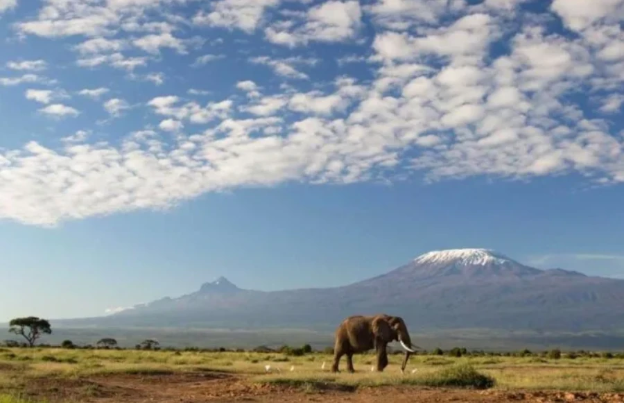

Every journey to Tanzania produces a story worth telling. Here is where those stories begin — with honest, experienced, first-hand insight into one of the most remarkable destinations on Earth.
Introduction
A Tanzania travel blog is not simply a collection of photographs and hotel recommendations. At its best, it is a living document of discovery — a repository of first-hand experience, honest observation, and practical wisdom gathered by travellers who have walked the same red-dust tracks, watched the same golden sunsets, and returned home permanently altered by what they encountered. Tanzania inspires this kind of writing because it is, genuinely, a country that resists easy summary. Every visit reveals something new. Every season shifts the story. Every guide opens a door into a dimension of the place you had not previously noticed.
Tanzania occupies a position in the world of travel writing that very few destinations can claim. It sits at the intersection of several of the most compelling travel narratives available to the modern explorer: the great wildlife journey, the mountain pilgrimage, the beach escape, the cultural immersion, and the historical encounter with the origins of humanity itself. A Tanzania travel blog that does justice to this breadth requires not just enthusiasm but specificity — the kind of granular, lived detail that separates genuine travel writing from promotional content dressed in personal pronouns.
This guide is written for the traveller who wants more than an itinerary. It is for the person who wants to understand Tanzania before they arrive — to feel the shape of the country, know what it demands and what it gives in return, and arrive prepared not just logistically but experientially. Whether you are building your own Tanzania travel blog, researching your first visit, or deepening your knowledge of a place you have already fallen in love with, what follows represents the kind of honest, informed, and personal engagement that Tanzania deserves.
Why Tanzania Produces the Best Travel Stories
There is a reason that Tanzania features more prominently in serious travel writing than almost any other destination in sub-Saharan Africa. It is not simply that the wildlife is extraordinary — though it is — or that the landscapes are dramatic — though they are. It is that Tanzania places the traveller in situations of such genuine novelty, emotional intensity, and physical challenge that the act of writing about the experience becomes both natural and necessary.
Consider the emotional range a single Tanzania trip can cover. You might spend a morning watching a cheetah hunt on the Serengeti plains, feeling the specific, electric stillness that descends on a safari vehicle when a predator begins to stalk. You might spend an afternoon at Olduvai Gorge, standing on the same ground where some of the earliest human beings who ever lived once walked, and feeling the vertiginous weight of that deep-time perspective. You might spend an evening eating freshly grilled octopus at Zanzibar’s Forodhani Night Market, surrounded by the sounds of Arabic music and the smell of cloves and the movement of a crowd whose ancestry draws from three continents. And you might spend the following morning watching the dawn arrive over the Indian Ocean from a white sand beach, feeling the specific contentment of having done something with your life that genuinely mattered.
Each of these experiences generates material. But Tanzania’s most powerful travel stories come not from the famous spectacles — the lion pride, the Kilimanjaro summit, the Migration river crossing — but from the unexpected, unrepeatable moments that no itinerary anticipates. The moment a young Maasai warrior corrects your assumption about his culture with quiet precision and evident amusement. The morning your guide stops the vehicle at what looks like an empty stretch of grassland and points to a hyena den entrance where five spotted cubs are tumbling over each other in the early light. The hour of near-total silence at a bush campsite when the only sounds are the distant call of a firecrown nightjar and the soft percussion of canvas in a night breeze, and you understand for the first time what it means to be genuinely away from the world.
The Essential Tanzania Travel Blog Categories
A comprehensive Tanzania travel blog should cover the country’s core experiential dimensions — each representing a distinct narrative thread that can be explored with its own depth and specificity.
Wildlife and Safari Reporting
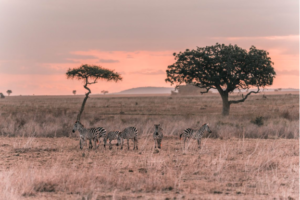
The beating heart of any Tanzania travel blog is the safari narrative — and the finest safari writing does more than catalogue sightings. It captures the feel of being inside a functioning, ancient ecosystem: the specific quality of Serengeti light at 6 am, the way dust hangs in the air above an elephant herd, the three-hour wait beside a waterhole that produces nothing and then, suddenly, produces everything.
Writing excellent safari content requires the same patience that produces excellent safari experiences — a willingness to stay with a subject, follow its implications, and resist the temptation to move on to the next impressive spectacle before the current one has been fully absorbed. The travellers who produce the most compelling Tanzania safari blog content are those who spend more time observing and less time cataloguing, and whose writing reflects the quality of attention they brought to the experience.
Key topics for Tanzania wildlife blog content include the Great Migration’s seasonal chapters — each with its own dramatic arc — the specific character of different parks (Tarangire’s baobab wilderness versus Ruaha’s remote ferocity versus the Serengeti’s elemental scale), and the extraordinary individual encounters — the specific lion, the specific leopard, the specific wild dog pack — that stay with a traveller long after the general impressions have faded.
Kilimanjaro Trekking Narratives
Kilimanjaro produces a particular category of travel writing that occupies a space between adventure memoir and personal reckoning. The mountain demands enough of its trekkers — physically and psychologically — that the experience becomes, for most people who undertake it, genuinely transformative. The finest Kilimanjaro blog content captures this transformation honestly: the elation of early camp days when altitude has not yet begun its assault, the grinding difficulty of the acclimatisation days in the alpine desert, the brutal and beautiful ordeal of summit night, and the specific, quiet triumph of Uhuru Peak at dawn.
Practical Kilimanjaro blog content — route comparisons, gear lists, training programmes, operator reviews — is consistently among the most searched Tanzania travel content online, reflecting the enormous community of aspiring trekkers who are researching the climb. The most valuable contributions combine this practical guidance with genuine personal experience: not just what to pack, but how it felt to wear those boots for seven days; not just which route has the highest success rate, but what the Shira Plateau looks like in the early morning light with the summit visible above the clouds.
Zanzibar Beach and Culture Writing
Zanzibar generates a different register of Tanzania travel blog writing — slower, more sensory, more culturally layered than the wildlife parks. The finest Zanzibar content captures the island’s dual identity: on one hand, a near-perfect Indian Ocean beach destination of white sand and warm turquoise water; on the other, a UNESCO-listed ancient city of labyrinthine alleyways, carved doors, spice-scented markets, and a history of trade, slavery, and colonial encounter that gives it an intellectual and emotional depth that most beach destinations lack entirely.
Zanzibar blog writing at its best moves between these two registers with ease — from a description of swimming with whale sharks off the north coast to an exploration of the former slave market beneath Christ Church Cathedral, from a sunset dhow cruise to a conversation with a Stone Town elder about the changing face of his neighbourhood. This range is what gives Zanzibar content its longevity and its capacity to attract readers who are not simply looking for beach holiday tips.
Cultural Immersion Stories
Tanzania’s cultural richness — encompassing over 120 ethnic groups, the Swahili coastal civilisation, the Maasai and Hadzabe of the interior, and the Arab-influenced culture of the Zanzibar archipelago — generates some of the most enduring Tanzania travel blog content. Cultural writing requires more care and preparation than wildlife or adventure writing, because it involves representing communities and traditions that the traveller is encountering from the outside.
The best Tanzania cultural blog content is characterised by genuine curiosity and epistemic humility — a willingness to acknowledge what you do not know, to ask questions rather than impose narratives, and to present communities as complex, contemporary human realities rather than picturesque remnants of a pre-modern world. A Maasai boma visit written with this quality of attention produces something far more valuable than the standard “warrior dance and beaded jewellery” treatment — it produces a portrait of a people navigating the twenty-first century on their own terms, with their own intelligence and their own agenda.
Practical Tanzania Travel Blog Topics That Drive Real Value
Beyond the experiential narratives, a Tanzania travel blog generates significant value through high-quality practical content — the kind of specific, accurate, and honest information that genuinely helps travellers plan better trips.
Honest Operator and Lodge Reviews
Tanzania’s accommodation and guiding landscape is vast and highly variable in quality. Honest, specific, experienced reviews of lodges, tented camps, and safari operators — written from genuine personal experience rather than press trip obligation — are among the most valuable contributions any Tanzania travel blog can make. The most useful reviews address not just the standard hospitality metrics (food quality, room comfort, service responsiveness) but the safari-specific dimensions that matter most: guide knowledge and passion, vehicle condition, proximity to productive wildlife areas, and the quality of the overall experience relative to the price paid.
Seasonal Planning Guides
Tanzania’s seasonal rhythms are complex enough that a dedicated, well-researched seasonal planning guide — covering the Great Migration’s monthly movements, the best parks for each time of year, and the practical implications of dry versus wet season travel — is consistently one of the most useful pieces of content any Tanzania travel blog can publish. The most valuable seasonal guides are written from actual experience of multiple Tanzania visits across different seasons, and reflect the honest trade-offs of each period rather than simply recommending peak season to everyone.
Budget and Cost Breakdowns
Transparent, current, and specific cost information is consistently among the most searched Tanzania travel content. Blog posts that provide honest breakdowns of what a Tanzania safari actually costs — including park fees, accommodation, internal flights, guide tips, and visa costs — at different budget levels serve an enormous practical need in the Tanzania travel planning community. The most effective cost content addresses the specific question that every first-time Tanzania traveller has: what do I actually need to spend to have an experience that genuinely delivers on what I have read about?
Photography Tips for Tanzania
Tanzania is one of the world’s premier wildlife photography destinations, and practical photography guidance — lens recommendations, exposure settings for different lighting conditions, positioning strategies, ethical wildlife photography principles — generates strong, lasting readership from the enormous community of serious amateur photographers who include Tanzania in their travel plans. The most useful photography content is written by people who have actually photographed Tanzania’s wildlife across multiple conditions and seasons, and who can speak to the specific challenges of Serengeti dust, Ngorongoro crater light, and the low-light demands of a Tarangire baobab sunrise.
Building a Tanzania Travel Blog That Stands Apart
The Tanzania travel blog landscape is crowded. Distinguishing genuinely valuable content from the enormous volume of generic travel information that characterises the middle tier of the space requires attention to a handful of principles that the finest Tanzania travel writers share.
Specificity over generality. The difference between “the Serengeti is amazing” and a precise description of the specific quality of Serengeti light at the moment before the first wildebeest crest a ridge during the morning migration is the difference between forgettable and memorable travel writing. The finest Tanzania travel blog content earns its reader’s trust by demonstrating that the writer was actually there, paying genuine attention.
Honest over promotional. Tanzania’s travel industry relies heavily on press trips, hosted experiences, and influencer partnerships that create structural incentives toward promotional positivity. Readers are sophisticated enough to detect the difference between a blog post that reflects genuine experience and one that reflects the interests of a commercial partner. The Tanzania travel blogs that build genuine long-term readership are those that tell the truth about experiences — including the difficult roads, the camp that did not deliver on its promises, the summit attempt that turned back below the crater rim.
Depth over frequency. A single outstanding long-form post about the specific experience of tracking wild dogs in Ruaha will generate more lasting value — for readers and for search engine visibility — than ten brief posts covering general Tanzania safari tips. The Tanzania travel blog space rewards genuine expertise and genuine depth far more reliably than it rewards content volume.
Conclusion
A Tanzania travel blog, at its finest, is an act of generosity — the sharing of hard-won experience, honest observation, and genuine knowledge with readers who have not yet made the journey but are dreaming of it. Tanzania inspires this generosity because it is the kind of destination that makes you want to tell everyone you know about what you have seen. The challenge is to translate that impulse into content that is genuinely useful, genuinely honest, and genuinely reflective of the extraordinary place it attempts to describe.
Tanzania will continue to generate travel stories for as long as the Serengeti plains remain wild, as long as the Kilimanjaro glaciers catch the dawn light, as long as the Zanzibar dhows sail out of Stone Town harbour on the morning tide, and as long as there are travellers curious and courageous enough to go and see it for themselves. The best Tanzania travel blogs are the ones that honour the place — not by making it sound like a product to be consumed, but by representing it as what it actually is: one of the last great wild places on Earth, and one of the most deeply human.
Write about Tanzania honestly, specifically, and with genuine care for both the place and its people. That is the only Tanzania travel blog worth reading — and the only one worth writing.
Every great Tanzania travel story begins the same way: with someone who decided to go. The rest writes itself.
Key Takeaways
- Tanzania’s experiential range is unmatched — wildlife safaris, Kilimanjaro trekking, Zanzibar beaches, cultural immersion, and human origins history generate material across every travel writing register from adventure memoir to cultural journalism.
- The most compelling Tanzania travel blog content comes from unexpected, unrepeatable moments — not the famous spectacles, but the specific, unplanned encounters that no itinerary anticipates and no promotional content captures.
- Specificity is the defining quality of great Tanzania travel writing — the precise detail, the named animal, the specific quality of light, the exact weight of a silence — these are what separate genuine travel writing from generic destination content.
- Tanzania’s four core blog content pillars — wildlife and safari narratives, Kilimanjaro trekking stories, Zanzibar culture and beach writing, and cultural immersion reporting — each require different writing approaches and appeal to distinct reader communities.
- Practical content drives consistent long-term readership — honest operator reviews, seasonal planning guides, cost breakdowns, and photography tips address the specific research needs of Tanzania’s enormous global planning community.
- Honest over promotional always wins — readers of Tanzania travel content are sophisticated enough to distinguish genuine experience from hosted-trip positivity, and the blogs that build lasting trust are those that tell the full truth about every experience.
- Depth over frequency is the right content strategy — one outstanding long-form Tanzania safari narrative generates more lasting value than ten brief general posts and reflects the genuine expertise that the Tanzania travel audience is seeking.
- Cultural writing requires particular care — representing Tanzania’s 120+ ethnic communities with genuine curiosity, epistemic humility, and respect for their contemporary complexity is both an ethical responsibility and a mark of quality travel writing.
Frequently Asked Questions (FAQ)
Q: What should a Tanzania travel blog cover to be genuinely useful to readers?
A: The most useful Tanzania travel blogs combine three distinct content types. First, experiential narrative content — first-person accounts of specific trips, parks, climbs, and cultural encounters written with genuine specificity and honesty. Second, practical planning content — operator reviews, accommodation comparisons, seasonal guides, visa and health information, and cost breakdowns that help readers make better trip decisions. Third, thematic deep-dives — focused explorations of specific aspects of Tanzania travel such as wildlife photography, the Great Migration’s annual cycle, Kilimanjaro route comparisons, or the cultural history of Zanzibar. Blogs that combine all three serve both the reader who is dreaming and the reader who is actively planning.
Q: How do I make my Tanzania travel blog stand out in a crowded online space?
A: The Tanzania travel blog space rewards genuine expertise over content volume. The blogs that build lasting, loyal readerships are those that demonstrate real first-hand knowledge — naming specific guides, describing specific camps, capturing the specific feel of specific moments in specific parks at specific times of year. Write longer, more deeply researched content than the competition. Be honest about what did not work as well as what exceeded expectations. Develop a specific area of expertise — wildlife photography, budget safari planning, Kilimanjaro routes, Zanzibar cultural history — and become the most authoritative voice in that niche. Authenticity and depth are the two qualities that the Tanzania travel audience rewards most reliably.
Q: What are the most searched Tanzania travel topics for blog content?
A: Based on consistent search trends, the highest-demand Tanzania travel blog topics include: Tanzania safari cost breakdowns and budget guides; Great Migration timing and viewing location guides; Kilimanjaro route comparisons and summit success rates; best time to visit Tanzania by park and activity; Zanzibar beach comparisons (Nungwi vs. Kendwa vs. Paje); Tanzania itinerary planning (7, 10, and 14-day frameworks); Tanzania safari packing lists; visa and entry requirements; Tanzania safari operator and lodge reviews; and wildlife photography tips for the Serengeti and Ngorongoro. Content that addresses these topics with genuine depth, current accuracy, and honest personal experience consistently ranks well and generates strong, sustained readership.
Q: How important is photography for a Tanzania travel blog?
A: Photography is extremely important for Tanzania travel blog content — both as illustration for written content and as a primary content format in its own right. Tanzania is one of the world’s most photographed wildlife destinations, and readers have a very high visual reference point for what Tanzania images should look like. Original, high-quality photography that captures specific moments — the particular light, the particular animal, the particular landscape — adds enormous credibility and emotional impact to written content. That said, authentically imperfect photography with strong contextual storytelling consistently outperforms technically polished but generic stock-style imagery. Readers trust the photograph that clearly came from genuine presence in the place.
Q: Should a Tanzania travel blog be written from a first-person or third-person perspective?
A: First-person narrative is the dominant and most effective voice for Tanzania travel blog content. Tanzania travel writing works because it is rooted in personal experience — the specific sensory detail, the emotional response, the unexpected learning — and first-person perspective is the most direct vehicle for conveying that experience authentically. Third-person or generic “you” formulations can work for purely practical content (visa guides, packing lists, seasonal calendars) where the personal dimension is less relevant, but for any experiential content — safari narratives, Kilimanjaro accounts, Zanzibar cultural writing — first-person voice delivers significantly more impact, credibility, and reader engagement.
Q: How do I handle the ethical dimensions of writing about Tanzania’s local communities?
A: Ethical cultural writing about Tanzania requires genuine preparation, humility, and care. Before writing about Maasai communities, Hadzabe hunter-gatherers, Zanzibar’s Swahili culture, or any other community encountered during a Tanzania trip, invest time in understanding their history, their contemporary situation, and their own perspectives on how they wish to be represented. Avoid romanticising or exoticising — present communities as complex, contemporary human realities rather than picturesque remnants of a pre-modern world. Seek informed consent for photographs of individuals. Credit local guides and community members by name where possible. If in doubt about whether a piece of cultural content is respectful and accurate, seek feedback from someone with genuine knowledge of the community before publishing.
Q: What is the best structure for a Tanzania safari blog post?
A: The most effective Tanzania safari blog posts typically follow a structure that balances narrative engagement with practical utility. Open with a specific, sensory scene from the experience rather than a generic introduction to Tanzania’s greatness — drop the reader immediately into a moment. Develop the narrative arc of the experience with genuine specificity — named animals, named guides, specific times, specific locations. Weave practical information (park access, accommodation used, best viewing times) naturally into the narrative rather than segregating it into a separate “tips” section. Conclude with a reflection that connects the specific experience to a broader insight about Tanzania, wildlife, travel, or the human condition. The finest Tanzania safari posts are the ones where the practical information could be extracted and used, but the narrative stands entirely on its own as a piece of writing worth reading for its own sake.
Q: Can a Tanzania travel blog be monetised effectively?
A: Yes — Tanzania travel content is among the most commercially viable travel blog niches available, for several reasons. Tanzania safaris represent high-value travel purchases where readers invest significant time in research before booking, making affiliate partnerships with tour operators, accommodation booking platforms, and travel insurance providers genuinely lucrative for blogs with established authority and readership. Tanzania’s global appeal — drawing high-net-worth travellers from North America, Europe, and Asia — means that the advertising CPM rates for Tanzania travel content are consistently above average for the travel niche. Display advertising, sponsored content partnerships with reputable Tanzania operators, and digital product sales (itinerary guides, photography presets, planning worksheets) all represent viable revenue streams for a Tanzania travel blog with genuine authority and an established audience.
Tanzania does not run out of stories. The only question is whether you are paying close enough attention to catch the ones worth telling.