

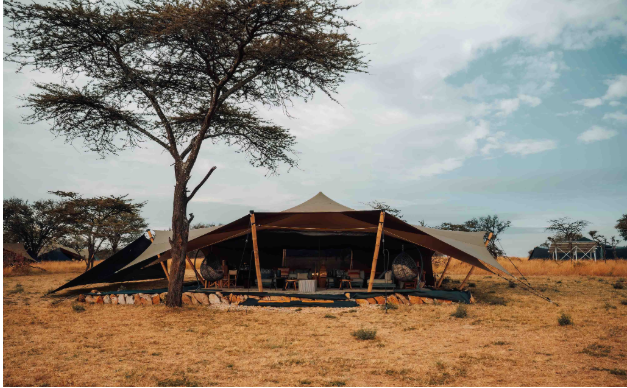

There is a particular sound that defines a night in the Serengeti. It is the low whoop of a hyena in the distance, the rasp of a leopard, the rumble of a lion’s roar carrying across miles of dark plains. In a solid-walled hotel, you would barely notice it. In a Serengeti tented camp, with only a layer of canvas between you and the open savannah, it becomes the soundtrack to your trip.
Staying in a tented camp is one of the most memorable ways to experience Tanzania’s most famous national park. This guide explains what a Serengeti tented camp actually is, the different styles available, how to choose the right location, what to expect day to day, and how to plan a stay that matches your budget and travel style.
What Is a Serengeti Tented Camp?
A tented camp is a safari accommodation built around canvas-walled tents rather than conventional buildings. The idea is simple: sleep close to nature without giving up comfort. But the word “tent” covers an enormous range of experiences.
At the simple end, you may find compact, practical tents with comfortable beds and shared facilities. At the luxurious end, a tented suite can include a wooden deck, a freestanding bath, fine linens, a private plunge pool and fully plumbed en-suite bathrooms. What they share is a light footprint on the land, an open and immersive atmosphere, and a sense of being genuinely inside the wilderness.
Many camps are also designed to be dismantled with minimal impact on the ground, which suits the Serengeti’s conservation priorities and the park’s strict rules on permanent construction.
Types of Serengeti Tented Camps
Permanent Tented Camps
These camps stay in one place year-round, usually on a platform with a canvas roof and walls, a solid floor and en-suite facilities. They typically offer reliable amenities such as hot showers, dining tents or lodges, lounge areas and sometimes a bar or small pool. They suit travelers who want comfort, consistency and a choice of service levels, from mid-range to luxury.
Seasonal and Mobile Camps
Mobile camps move during the year to stay close to the Great Migration. Staff set up in a chosen location for a few months, then pack down and relocate as the herds shift. Facilities are generally comfortable, often with bucket showers and solar lighting, but the focus is on proximity to the action and a more authentic bush feel. Many guests enjoy the sense of waking up in the right place at the right time, with wildlife right outside the tent.
Luxury Tented Camps
Luxury camps lean into high-end design, private guides, gourmet meals, curated experiences and exceptional service. They often feature spacious tents with real furniture, outdoor showers, private decks and attentive staff. Expect higher rates, particularly in peak season.
Budget and Public Campsites
For travelers watching costs, basic camping options exist, often on public or special campsites inside the park. These generally involve simpler setups and shared facilities. They offer a raw, adventurous experience and good value, though comfort levels are modest.
Choosing the Right Location in the Serengeti
The Serengeti is vast, covering roughly 14,750 square kilometers, so where your camp sits matters. Different regions shine at different times of year.
Central Serengeti (Seronera): A good all-season base with reliable big-cat sightings, including lions and leopards. Seronera is one of the more accessible areas, with a wide range of camps and consistent wildlife viewing.
Southern Serengeti and Ndutu: The place to be for calving season, usually from about January to March, when huge herds gather on the short-grass plains and predators follow. Camps here are often seasonal.
Western Corridor (Grumeti): Good for the Grumeti River crossings, typically around May to July, with lush woodland, crocodiles and a wilder feel.
Northern Serengeti (Kogatende and Lamai): The prime area for Mara River crossings, generally between July and October. It is more remote and usually quieter, with excellent wildlife year-round.
Eastern Serengeti: Quieter and scenic, with rocky outcrops called kopjes and good predator viewing, depending on the season.
If your dates are flexible, choose your camp based on the migration’s expected position rather than booking first and hoping the herds arrive.
What to Expect Day to Day
A typical day at a Serengeti tented camp follows the rhythm of the animals.
Early morning: A wake-up call, often before dawn, with hot drinks delivered or waiting. Many guests head out for a sunrise game drive when predators are still active and the light is at its best.
Mid-morning to midday: A return to camp for a full breakfast, or a bush breakfast in the field. Midday is a good time to rest, as animals are less active and temperatures rise.
Afternoon: A second game drive, often with a sundowner at a scenic spot. Some camps offer guided walks, cultural visits or hot air balloon flights as optional extras.
Evening: Dinner under the stars or in a dining tent, often around a fire. Many camps escort guests to their tents after dark for safety, since wildlife can wander through camp.
Evenings are especially atmospheric. With little light pollution, the night sky is spectacular, and the sounds of the bush carry clearly.
Comfort, Facilities and Safety
Many first-timers worry about comfort and safety in a tent. In practice, reputable tented camps are well organized on both fronts.
Beds and bathrooms: Most mid-range and luxury camps provide proper beds, bedding and en-suite bathrooms with flush toilets and hot water, usually delivered by a heated tank or bucket system. Water is conserved carefully, so shorter showers are standard.
Power and connectivity: Solar power is common, so charging points may be limited to the main tent or at certain times. Wi-Fi is often patchy or unavailable, which many guests find a welcome break.
Wildlife safety: Camps follow clear rules. Guests are typically escorted after dark, and tents are closed with zippers or doors. Staff will brief you on what to do if animals come close. Listen carefully and follow the guidance.
Temperature: Days can be warm, but nights and early mornings can be surprisingly cold, particularly in the dry season and at higher elevations. Most camps provide hot water bottles or extra blankets.
The Best Time to Stay
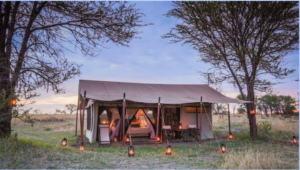
The Serengeti offers excellent wildlife viewing throughout the year, but timing affects what you see and what you pay.
- June to October (dry season): Peak season, with excellent visibility, concentrated wildlife and strong chances of Mara River crossings in the north. Book early.
- January to March: Calving season in the south. Expect intense predator activity and green landscapes.
- April to May: Long rains, with lower rates, lush scenery and fewer visitors. Some camps close, and roads can be challenging.
- November to December: Short rains, with the herds moving south again and a quieter atmosphere.
How to Choose Your Camp
Consider these questions before you book:
- What is your priority? Migration, big cats, privacy or luxury will point to different camps and areas.
- How much comfort do you need? Decide whether you want a bucket shower and simple tent or a suite with a deck and bath.
- Do you prefer a small or large camp? Smaller camps often feel more intimate, with personal service and fewer vehicles.
- Is the camp fenced or open? Most are unfenced, which is part of the experience. Ask about safety protocols.
- What is included? Check meals, drinks, game drives, park fees, laundry and transfers.
- How sustainable is the camp? Look for solar power, water conservation, waste management and local employment.
Packing Tips for a Tented Camp
Pack light, neutral-colored layers, a warm fleece and jacket for cool mornings, a hat, sunscreen, sturdy shoes and sandals. Bring a headlamp or torch, binoculars, a camera with spare batteries, insect repellent and any personal medication. Soft-sided bags are easier to handle, especially if you will fly between camps in small aircraft with luggage limits.
Responsible Camping in the Serengeti
The Serengeti’s ecosystem is delicate, and every visitor plays a part in protecting it. Choose camps that minimize their environmental impact, recycle where possible and support local communities through employment and training. Follow park rules, stay in the vehicle during game drives unless your guide advises otherwise, and never feed or approach animals. Small choices, such as conserving water and limiting plastic waste, help keep the park wild for future visitors.
Conclusion
A Serengeti tented camp offers something no conventional hotel can: the feeling of being part of the landscape. Whether you choose a simple mobile camp that follows the herds or a luxury tented suite with a private deck, you gain closer access to wildlife, a deeper connection to the sounds and rhythms of the bush, and stories you will tell for years. The key is matching camp style and location to your priorities, timing your trip around the migration and booking early for peak months. Do that, and a night under canvas becomes one of the highlights of your Tanzania journey.
Key Takeaways
- A Serengeti tented camp ranges from simple, budget-friendly setups to high-end luxury suites.
- Permanent camps offer consistency, while mobile camps follow the Great Migration for a more immersive experience.
- Location matters: central Serengeti suits year-round viewing, the south suits calving, and the north suits Mara River crossings.
- Days follow a rhythm of early game drives, midday rest and afternoon drives.
- Most camps provide proper beds, hot water and safe, escorted access after dark.
- Nights can be cold, so pack warm layers.
- Book early for June to October and choose camps with strong sustainability practices.
Frequently Asked Questions
- What is a Serengeti tented camp?
It is a safari accommodation made up of canvas tents, ranging from simple, practical setups to luxurious suites with en-suite bathrooms, decks and fine dining. - Are tented camps safe?
Reputable camps follow strict safety procedures, including escorts after dark, secure tent closures and staff briefings. Follow instructions and you will be well looked after. - Will I have a private bathroom?
Most mid-range and luxury tented camps offer private, en-suite bathrooms with flush toilets and hot water. Budget and basic camps may have shared facilities. - What is the difference between a permanent and a mobile camp?
Permanent camps stay in one location year-round. Mobile camps move seasonally to stay close to the migration and tend to feel more rustic, though some are quite luxurious. - When is the best time to stay in a Serengeti tented camp?
June to October is best for general wildlife viewing and crossings, and January to March is ideal for calving. Other months offer quieter conditions and lower rates. - Is it cold at night?
Often, yes. Early mornings and evenings can be chilly, particularly in the dry season. Pack a warm jacket and expect extra blankets or hot water bottles at many camps. - Can I charge my devices and use Wi-Fi?
Many camps use solar power and offer charging points in common areas or tents. Wi-Fi may be limited or unavailable, so plan accordingly. - How far in advance should I book?
For peak months, book as early as possible, ideally nine to twelve months ahead. Off-peak stays can often be arranged on shorter notice. - Are meals and game drives included?
Many camps offer full-board packages that include meals, and some include game drives and drinks. Always check what your quote covers, including park fees. - Is a tented camp suitable for families or first-time safari-goers?
Often yes, especially at camps with family-friendly policies and good safety measures. Check age limits and ask about child-specific facilities and activities.