

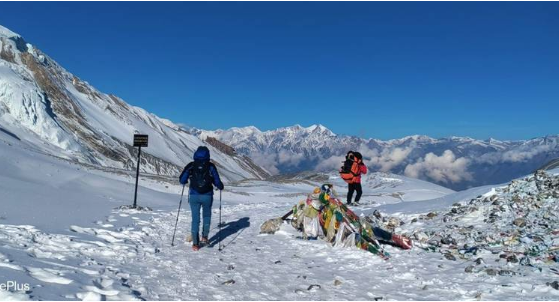

The Annapurna region is one of Nepal’s most diverse trekking destinations, offering spectacular Himalayan scenery, traditional villages, lush forests, deep valleys, and high mountain landscapes. Two popular itineraries are the Annapurna Circuit Trek 13 Days and the Annapurna Base Camp Trek 9 Days.
Although both routes explore the Annapurna region, they offer different trekking experiences. The Annapurna Circuit is a longer journey through varied landscapes and includes the challenging Thorong La Pass, while the Annapurna Base Camp route focuses on reaching the spectacular natural amphitheater surrounded by the Annapurna mountain range.
Understanding the routes, difficulty, highlights, and preparation requirements can help travelers choose an itinerary that suits their time and trekking goals.
Annapurna Circuit Trek 13 Days
The Annapurna Circuit Trek 13 Days is designed for travelers who want to experience a substantial section of the classic Annapurna Circuit within a relatively compact schedule.
The route passes through changing environments, beginning in lower valleys and gradually reaching high-altitude landscapes around Thorong La Pass.
Depending on road conditions and the selected itinerary, transportation can reduce some of the lower-elevation walking sections.
Typical 13-Day Annapurna Circuit Itinerary
The exact itinerary can vary, but a typical journey may follow this structure.
Day 1: Kathmandu to Dharapani
The journey begins with a road transfer from Kathmandu toward the Annapurna region.
The route follows mountain roads through hills, rivers, and rural settlements before reaching Dharapani.
Day 2: Dharapani to Chame
The trail continues through forests and mountain villages toward Chame, the administrative center of Manang District.
Mountain views become increasingly prominent along the route.
Day 3: Chame to Pisang
The landscape gradually becomes more alpine as the trail approaches upper Manang.
Pisang offers views of surrounding peaks and traditional mountain architecture.
Day 4: Pisang to Manang
The route continues toward Manang through a dramatic mountain valley.
Trekkers can experience the changing vegetation, traditional villages, and impressive views of the Annapurna range.
Day 5: Acclimatization at Manang
An acclimatization day allows the body to adjust to increasing elevation.
Short hikes around the village can provide mountain views without adding excessive altitude gain.
Day 6: Manang to Yak Kharka
The trail climbs gradually through increasingly dry and alpine terrain.
Yak Kharka is an important overnight stop before the journey toward Thorong La.
Day 7: Yak Kharka to Thorong Phedi
The route continues toward Thorong Phedi, a common base for the following day’s pass crossing.
The terrain becomes more rugged and vegetation becomes increasingly limited.
Day 8: Thorong La Pass and Muktinath
One of the most challenging days begins early with the ascent toward Thorong La Pass.
At approximately 5,416 meters, Thorong La is a major high-altitude crossing.
After reaching the pass, the trail descends toward Muktinath.
Day 9: Muktinath to Jomsom
The journey continues through the Mustang region toward Jomsom.
The landscape becomes drier and more influenced by the rain-shadow environment of the Himalayas.
Day 10–13: Lower Mustang and Return to Kathmandu
The remaining itinerary can include transportation through the Kali Gandaki Valley, visits to local villages, and the return journey to Kathmandu.
The exact schedule depends on road conditions and whether flights or road transportation are used.
Annapurna Base Camp Trek 9 Days
The Annapurna Base Camp Trek 9 Days offers a shorter trekking experience centered around Annapurna Base Camp.
Unlike the Annapurna Circuit, this route travels into a mountain sanctuary surrounded by towering peaks.
The trek combines terraced hillsides, rhododendron forests, traditional villages, waterfalls, and dramatic mountain scenery.
Typical 9-Day Annapurna Base Camp Itinerary
The exact itinerary varies depending on transportation arrangements, but a compact itinerary may include:
Day 1: Drive to Pokhara or Trek Starting Point
Depending on the travel plan, the journey may begin with transportation from Kathmandu to Pokhara and onward toward the trekking starting point.
Day 2: Trek to Chhomrong
The trail passes through traditional villages and terraced farmland while gradually gaining elevation.
Chhomrong is an important settlement on the route toward Annapurna Base Camp.
Day 3: Chhomrong to Himalaya
The trail enters deeper mountain terrain and passes through lush forests.
Day 4: Himalaya to Machhapuchhre Base Camp
The landscape becomes increasingly alpine as the trail approaches Machhapuchhre Base Camp.
The surrounding mountains create spectacular scenery.
Day 5: Machhapuchhre Base Camp to Annapurna Base Camp
The trail continues into the Annapurna Sanctuary.
Annapurna Base Camp is located at approximately 4,130 meters and is surrounded by dramatic Himalayan peaks.
Day 6: Annapurna Base Camp to Bamboo
After enjoying the mountain environment, the route begins descending through the valley.
Day 7: Bamboo to Jhinu Danda
The trail continues toward lower elevations, with forested sections and traditional villages along the way.
Day 8: Jhinu Danda to Pokhara
The trek ends with a descent and road transfer toward Pokhara.
Day 9: Pokhara to Kathmandu
The final day involves travel back to Kathmandu by road or flight, depending on the selected arrangement.
Highlights of Annapurna Circuit Trek 13 Days
The Annapurna Circuit Trek 13 Days provides a broad range of landscapes and cultural experiences.
Major highlights include:
- Thorong La Pass
- Manang Valley
- Muktinath
- Jomsom
- Kali Gandaki Valley
- Annapurna mountain range
- Traditional Himalayan villages
- Buddhist and Hindu cultural sites
- Diverse vegetation and landscapes
The journey is particularly notable for its dramatic change in scenery from subtropical valleys to high-altitude terrain.
Highlights of Annapurna Base Camp Trek 9 Days
The Annapurna Base Camp Trek 9 Days focuses on the mountain sanctuary and surrounding peaks.
Highlights include:
- Annapurna Base Camp
- Machhapuchhre Base Camp
- Machhapuchhre
- Annapurna South
- Hiunchuli
- Traditional Gurung villages
- Rhododendron forests
- Mountain viewpoints
- Hot springs around Jhinu Danda
The route is especially appealing to travelers who want a shorter trek with a strong focus on Himalayan scenery.
Annapurna Circuit vs. Annapurna Base Camp
Both routes offer spectacular mountain experiences, but their character is different.
Annapurna Circuit Trek 13 Days
The circuit is suitable for travelers interested in:
- A longer Himalayan journey
- Thorong La Pass
- Diverse landscapes
- Manang and Mustang
- High-altitude trekking
- A broader cultural experience
Annapurna Base Camp Trek 9 Days
The ABC route is suited to travelers looking for:
- A shorter trekking itinerary
- Annapurna Base Camp
- Machhapuchhre scenery
- Forest trails
- Gurung villages
- A relatively focused Himalayan adventure
Difficulty and Fitness
Both routes require reasonable physical preparation.
The Annapurna Circuit Trek 13 Days becomes particularly demanding around Thorong La because of the high elevation and long walking day.
The Annapurna Base Camp Trek 9 Days is generally shorter, but it still includes steep ascents and descents and reaches approximately 4,130 meters.
Preparation can include regular walking, hiking, stair climbing, and cardiovascular exercise before the trek.
Altitude and Acclimatization
Altitude management is particularly important on the Annapurna Circuit.
Thorong La reaches approximately 5,416 meters, making proper acclimatization essential.
Annapurna Base Camp is approximately 4,130 meters above sea level, so altitude should still be considered even though it is lower than Thorong La.
Symptoms such as persistent headache, dizziness, nausea, unusual fatigue, confusion, or difficulty breathing should be taken seriously. Trekkers should inform their guide immediately and descend if significant symptoms develop.
Best Time for Annapurna Treks
Spring and autumn are traditionally popular seasons for trekking in the Annapurna region.
Spring
March to May generally provides favorable trekking conditions, with rhododendrons blooming in many lower-elevation areas.
Autumn
September to November is popular for generally stable weather and good mountain visibility.
Winter
Winter can bring snow and freezing temperatures at higher elevations, particularly around Thorong La.
Monsoon
June to August brings significant rainfall to many parts of the Annapurna region, although the Mustang side lies in a rain-shadow area and can have different conditions.
Travelers should check current weather and trail conditions before departure.
Accommodation and Food
Tea houses and trekking lodges are widely available along both routes.
Facilities vary depending on the location, with more basic accommodation at higher and remote elevations.
Common meals include:
- Dal bhat
- Rice
- Noodles
- Soups
- Vegetables
- Eggs
- Bread
- Potatoes
- Tibetan-style dishes
Trekkers should carry snacks for longer walking days.
What to Pack
A suitable packing list may include:
- Comfortable trekking boots
- Warm insulated jacket
- Thermal layers
- Waterproof jacket
- Trekking trousers
- Gloves
- Warm hat
- Sunglasses
- Sunscreen
- Trekking poles
- Headlamp
- Reusable water bottle
- Water purification method
- Personal medication
- Basic first-aid supplies
- Sleeping bag if required
Packing requirements can vary according to the season and itinerary.
Permits and Trekking Regulations
Trekkers in the Annapurna region generally need the appropriate trekking permits and conservation-area documentation.
Requirements and regulations can change, so travelers should confirm current requirements before starting the trek.
A registered trekking agency can assist with permits, transportation, accommodation, and guide arrangements.
Responsible Trekking
The Annapurna region receives many visitors every year, making responsible tourism especially important.
Trekkers can help protect the region by:
- Reducing plastic waste
- Carrying reusable bottles
- Staying on designated trails
- Respecting local customs
- Avoiding littering
- Respecting religious sites
- Supporting local tea houses and businesses
- Using water responsibly
These simple practices can help protect the region’s environment and support local communities.
Key Points to Remember
- The Annapurna Circuit Trek 13 Days offers a diverse journey through Manang, Thorong La, Muktinath, and the Mustang region.
- Thorong La Pass reaches approximately 5,416 meters.
- The Annapurna Base Camp Trek 9 Days focuses on the Annapurna Sanctuary and reaches approximately 4,130 meters.
- Annapurna Base Camp is surrounded by impressive Himalayan peaks.
- Machhapuchhre Base Camp is an important highlight of the ABC route.
- Both treks involve steep sections and require reasonable physical fitness.
- Acclimatization is particularly important for the Annapurna Circuit.
- Spring and autumn are traditionally popular trekking seasons.
- Winter conditions can affect high-altitude routes.
- Monsoon weather can bring rain and muddy trails in parts of the Annapurna region.
- Tea houses provide accommodation and meals along established routes.
- Travelers should confirm current permit and trekking requirements before departure.
- Responsible tourism helps protect the Annapurna region’s natural and cultural heritage.
Conclusion
The Annapurna Circuit Trek 13 Days and Annapurna Base Camp Trek 9 Days offer two distinct ways to explore the spectacular Annapurna region.
The circuit provides a broader Himalayan journey, crossing the challenging Thorong La Pass and traveling through the contrasting landscapes of Manang, Mustang, and the Kali Gandaki Valley. The ABC route offers a more focused adventure, leading into the Annapurna Sanctuary and directly toward the dramatic mountain amphitheater surrounding Annapurna Base Camp.
Both itineraries require preparation, suitable equipment, sensible pacing, and attention to altitude and weather conditions. By choosing an itinerary that matches their fitness, available time, and trekking interests, travelers can enjoy a rewarding and memorable experience in the Nepal Himalayas.